

By NIA Desk
Electric Vehicles (EVs) are becoming increasingly popular in India due to lower running costs, reduced maintenance, and environmental benefits. Many owners report saving thousands of rupees every month on fuel and servicing. However, this saving can disappear quickly after even a minor accident.
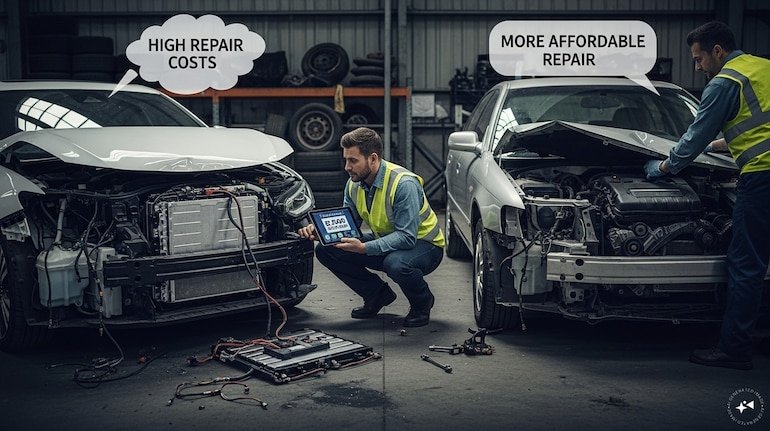
A small collision that would cost only a few thousand rupees to repair in a petrol/diesel car can result in a massive ₹4 lakh to ₹6 lakh bill for an EV — mainly because of the high cost of battery packs and specialised components.
Why EV Repairs Are So Expensive After Accidents
Unlike Internal Combustion Engine (ICE) vehicles, EVs have expensive high-voltage batteries, inverters, electronic sensors, and complex electrical systems. These parts are not only costly but also require specialised repair expertise, which is still limited in many parts of India.
“EVs offer lower running costs but higher and more volatile accident-related repair costs,” said Dinesh Mosamkar, Senior VP – Consumer Underwriting, Tata AIG General Insurance.
Naval Goel, CEO of PolicyX.com, added: “The battery can account for a large portion of the car’s value. EVs need specialised repairs, making them riskier for your wallet after an accident.”
Also Read : UK AI Facial Recognition Oversight Lagging Far Behind Technology
Insurance Premiums: EVs vs Petrol Cars
EV insurance premiums are generally higher because insurers factor in the high replacement cost of batteries and the evolving repair ecosystem.
While a comprehensive policy covers accidental damage, fire, or theft, standard policies may not fully cover battery-related issues such as:
- Battery degradation
- Water ingress
- Short circuits
- Deep discharge
- Manufacturing defects
This is exactly where the Battery Protection Add-on becomes extremely important.
Key Insurance Add-Ons Every EV Owner Should Consider
| Add-On Cover | What It Does | Why Important for EVs |
|---|---|---|
| Battery Protection | Covers repair/replacement of battery due to specific damages | Most critical – protects expensive battery |
| Zero Depreciation | No deduction on parts replacement | Saves huge money on costly components |
| Return to Invoice (RTI) | Pays full purchase price if vehicle is total loss | EVs reach total loss faster |
| Roadside Assistance | 24×7 support including towing & charging | Limited EV service centres |
| Consumables Cover | Covers nuts, bolts, lubricants etc. | Often excluded in standard policies |
Paras Pasricha, Head – Motor Insurance, Policybazaar.com recommends: “For first-time EV buyers, opting for a battery protection add-on is a smart move to avoid unexpected high out-of-pocket expenses.”
Additional Costs to Keep in Mind
- Home Charger Installation: Can cost ₹20,000 or more depending on the type and your electrical setup.
- Apartment residents may need society approvals and dedicated parking with sufficient electrical load.
Expert Tips for EV Buyers
- Always opt for a comprehensive insurance policy with battery add-on right from the beginning.
- Compare quotes from multiple insurers (Tata AIG, Policybazaar, etc.) as coverage and premiums vary.
- Understand depreciation rules — batteries depreciate fast, so zero-depreciation cover helps.
- Check service network availability in your city before buying an EV.
- Read policy wordings carefully, especially exclusions related to battery damage.
Frequently Asked Questions (FAQs)
Q1. Is the EV battery covered under standard car insurance?
A: Partial coverage is available for accidental damage, but many scenarios (water damage, short circuit, degradation) require a separate battery protection add-on.
Q2. How much does battery replacement cost?
A: It can range from ₹3 lakh to over ₹10 lakh depending on the EV model, making the add-on highly valuable.
Q3. Are EV insurance premiums higher than petrol cars?
A: Yes, mainly due to expensive components and limited repair ecosystem.
Q4. Should first-time EV buyers buy battery add-on?
A: Absolutely recommended by experts to protect against sudden high repair costs.
Q5. Does battery insurance cover theft or fire?
A: Most comprehensive policies cover fire and theft, but confirm specific battery add-on terms with your insurer.
Conclusion
While EVs provide excellent day-to-day savings, they come with higher financial risks in case of accidents. A minor crash can turn into a major financial shock if you don’t have proper insurance coverage.
Battery Insurance Add-on is no longer optional — it is essential for peace of mind in 2026 as EV adoption grows rapidly across India.
Before buying your next electric car, make sure your insurance policy is as future-ready as your vehicle.